
بسم الله الرحمن الرحيم
Tunisia in the Labyrinth of Crises: Where is the Flaw?
(Translated)
Al-Rayah Newspaper - Issue 621 - 14/10/2026
By: Ustadh Yassin Ben Yahya
The discussion is no longer about a single crisis in Tunisia, but about a series of interconnected crises from which the water, electricity, oil, bread, sugar, and gasoline sectors have not escaped... endless queues, and transportation—it’s beyond description! No sooner does one crisis ease than its sister appears, punctuated by fixed occasions: the start of the school year, holidays, and the price of meat. A state that deals with crises by procrastination at times and by distraction at others; a summer of festivals and artists, and a winter of sports tournaments.
Crises multiply, and diagnoses multiply alongside them. The opposition says: the President’s policy has failed, and the presidency says: it is a deliberate conspiracy to destabilize the country. And when tensions intensify and the street mobilizes, the President intervenes with a speech about a “conspiracy” and “tormenting the people,” without naming a specific party, though it is understood that he means internal parties. The result is more tension, a degradation of the situation, and a loss of confidence in a political class that makes promises and does not deliver, which has failed to control the situation or even reassure the people.
The Real Reasons Behind Them Are Immutable Laws
The crises were reflected in the public's reluctance to even think about building a future in the country. No projects, no investment, no marriage... The obsession with leaving, or rather the collective flight to the “promised paradise” in Western countries, takes hold. The numbers are catastrophic, not only in Tunisia but in all countries of the region.
In the third quarter of 2025, 1,316 protest movements were recorded. 93% of Tunisians believe the country is heading in the wrong direction. Trust in parliament does not exceed 4%, in parties 3%, while 89% do not trust the justice system. Youth participation in elections does not exceed 6%. And 92% believe that foreign interference in election campaigns via the internet and media poses a danger to democracy—one of the highest rates in the world.
But the real causes run deeper than the failure of successive faces, deeper than the failure of the pursued policy, and deeper than the failure of the system. Allah (swt) created the universe, humanity, and life, and He placed within His creation laws (سنن sunan) that do not fail or falter. Allah (swt) says: [ظَهَرَ الْفَسَادُ فِي الْبَرِّ وَالْبَحْرِ بِمَا كَسَبَتْ أَيْدِي النَّاسِ لِيُذِيقَهُم بَعْضَ الَّذِي عَمِلُوا لَعَلَّهُمْ يَرْجِعُونَ] “Corruption has appeared on land and sea because of what the hands of people have earned, so that He may let them taste part of what they have done, that perhaps they will return to righteousness” [TMQ Surah Ar-Rum: 41], and He (swt) says: [وَمَنْ أَعْرَضَ عَن ذِكْرِي فَإِنَّ لَهُ مَعِيشَةً ضَنكًا] “But whoever turns away from My remembrance—indeed, he will have a depressed life” [TMQ Surah Taha: 124]. And the Messenger of Allah (swt) said: «يَا مَعْشَرَ الْمُهَاجِرِينَ: خَمْسٌ إِذَا ابْتُلِيْتُمْ بِهِنَّ، وَأَعُوذُ بِاللهِ أَنْ تُدْرِكُوهُنَّ» “O company of Emigrants, five things if you are afflicted with them—and I seek refuge in Allah (swt) that you should reach them” — the hadith, which includes that the appearance of obscenity, short measure and weight, withholding Zakat, breaking the covenant, and abandoning judgment by the Book of Allah (swt), the Noble Quran, are all gateways to corruption, poverty, tyranny of authority, and the domination of an enemy.
From Bourguiba to Ben Ali... a Chain of Negligence
Our discussion about the lack of trust in the state is not a recent development. We recall the statement of the sheikh of the resistance against French colonialism in Tunisia, al-Qa'id 'Ali ibn Khalifa al-Naffaati, when al-Sadiq Bey signed the Protectorate document, (الآن صارت طاعة الباي كفر) “Now, obedience to the Bey has become disbelief.”
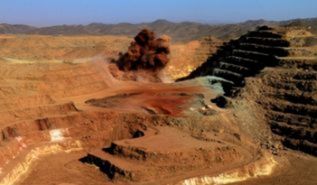
From Bourguiba, who placed his hands together with those of the colonizer in building what was called the “modern” state that separates religion from the state, and left him the wealth without a meter “in trust,” and the education system established by the Frenchman Jean Dupias to train workers for France. To Ben Ali and his policy of drying up the sources of religiosity, leaving the colonizer free to roam and plunder the wealth. The case of the Miskar field and British Gas, the largest gas field in Tunisia, was depleted by Shell for 30 years (1992–2022), selling the gas to the Tunisian Company for Electricity and Gas (now bankrupt) at the global market price! Then he fled after the revolution, having looted $20 billion, and before that, $40 billion.
Then came the revolution of 2011, and after the G7 meeting in Deauville, France, the decision was: continuation of the regime, commitment to treaties, and repayment of debts, without any mention of the looted and smuggled funds in Europe. The rule says: The state that does not hold the corrupt accountable will itself be held accountable by history and collapse.
The dream of the revolution collapsed into a fragile political reality and a struggle for power. There is no great cause to galvanize public opinion. And when the collective goal is absent, society disintegrates, and each individual becomes responsible for their own salvation. We entered the tunnel of debt and the policies dictated by the International Monetary Fund, including the lifting of subsidies and the halting of public sector hiring, so that the young person finds that the state provides them with neither work nor a future. When people see that the elites have no strategy, that they chase after pleasing foreign powers for crumbs and refuse to sacrifice their own gains, how can we ask them to sacrifice?
The Flaw in a Political Medium Paralyzed by Its Imported Ideology
The problem with the existing political medium is that most of it is steeped in Western political thought, having made democracy the axis of political action, to the point where most parties have become colorless, tasteless, and without a cause.
And today, the conflict between the authority and the opposition over who possesses correctness and legitimacy—whether through direct or representative democracy—has not been resolved by either side, nor will they succeed, because democracy lacks criteria for validity and invalidity, such as the saying of Allah (swt) Who said: [وَمَا اخْتَلَفْتُمْ فِيهِ مِن شَيْءٍ فَحُكْمُهُ إِلَى اللَّهِ] “And in whatever you differ, its judgment is to Allah (swt),” [TMQ Surah Ash-Shura: 10], and the statement of Khaleefah (Caliph) Abu Bakr al-Siddiq (ra): (أطيعوني ما أطعت الله فيكم، فإن عصيته فلا طاعة لي عليكم) “Obey me as long as I obey Allah (swt) among you, but if I disobey Him, then there is no obedience due to me from you.”
Democratizing the country is part of a Western plan that allows the colonialist to penetrate and control the scene and the laws, thereby enabling investors to enter, form partnerships, and deplete resources of all kinds—especially when they subjected the arbitration of vital energy investments to international law in the event of disputes.
Democracy has become a tainted commodity among its own people—neither Trump nor Europe (today the right is sweeping Italy, Germany, and France); their greatest obsession is Islam and immigration. If the West were left without our wealth, they would devour each other. And look at the size of the debt of the world's major countries now... astronomical figures.
If the solutions from within the system are nothing but patchwork and deception, then where is the alternative?
The strength of regimes is not apparent in normal circumstances but during crises, and the solution is not in patching a system that has proven its failure, but in returning to the origin: an ‘Aqeedah (creed) that governs, a Shariah Law that is applied, justice that is established, and a unified Ummah.
As for the desired alternative, Hizb ut Tahrir has prepared it comprehensively and in detail, and its members strive day and night, calling upon the sons and daughters of their Ummah, and those among them with military strength and power, to rally around the Ummah's civilizational project and roadmap to resume the Islamic way of life and establish the Khilafah (Caliphate) state. Under its shade, Tunisia and the entire Ummah will meet a new dawn that turns the page on the lean years and restores to the Ummah its historical leadership—when it relied upon its Lord (swt) and then upon the arms of its sons, not upon the negotiating tables of the disbelieving colonialists.