

Media Office
Wilayah Egypt
| H. 7 Ramadan 1447 | No: 1447 / 24 |
| M. Tuesday, 24 February 2026 |
Media reports claim that Egyptians spend approximately two billion pounds daily on food during Ramadan, totaling nearly sixty billion pounds for the entire month. This figure is presented in a context that suggests economic prosperity and dynamism. However, a closer examination reveals that this is not a sign of prosperity, but rather an indicator of the deep flaws in the existing economic system and the lack of genuine concern for the people's well-being.
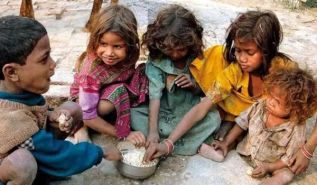
If the daily amount is divided by the population, the per capita share is no more than approximately 18-20 Egyptian pounds per day. This figure, when compared to the prices of basic commodities, collapses completely. A kilo of rice is approaching 35 pounds, and a kilo of meat has exceeded 400 pounds, not to mention oil, sugar, vegetables, and eggs. The realistic minimum for feeding one person a simple meal is no less than 50 pounds per day, which is the minimum for survival, not sufficiency. So how can an average of 18 pounds be portrayed as a huge sum?!
Even if this figure is accurate, it is being presented as an exorbitant sum reflecting people's extravagance during Ramadan, thus justifying new or even harsher austerity measures and further taxation based on the assumption that they spend this enormous amount daily. However, this figure does not reflect the state's generosity or the people's purchasing power; rather, it reflects what people are deducting from their already meager incomes. It is the people’s money, taken from their limited wages, from their savings that are eroded by inflation, and from their purchasing power, which decreases year after year. This spending is not a gift, but a drain. The state, through its fiscal and monetary policies, its direct and indirect taxes, and its repeated price hikes, contributes to this drain and then presents the results as an achievement!
The crux of the matter lies not in the figure itself, nor in the function of the state. In Islam, the state is not a tax collection agency, nor merely a guardian of the market economy, but rather a guardian of the affairs of its subjects. This guardianship is not a political slogan, but a firmly established Islamic ruling. The ruler is accountable to Allah for fully meeting the basic needs of every individual: food, clothing, and shelter. These rights are not acts of charity, but obligations.
In Islam, ownership is divided into individual, public, and state ownership. Major resources such as energy, minerals, and public utilities are public property belong to the Ummah. Their ownership cannot be transferred to private companies, nor mortgaged to Western interests. Their revenues must be used to meet the needs of the people, not to pay interest on debts or to inflate the profits of a select few. If these resources were managed according to Islamic law, they would be sufficient to guarantee sufficiency for every individual.
The existing capitalist system concentrates wealth in the hands of a few, unleashes the control of the market, and transforms the state into a tax collector and guardian of vested interests. Under the guise of liberalization, the state relinquishes its role in price control, utilities are privatized, and indirect taxes are imposed, disproportionately affecting the poor before the rich, while the people are expected to bear the burden. If spending increases during a particular season, the figure is presented as a sign of economic strength, when in reality it may reflect hardship and suffering.
Ramadan, by its very nature, is a month in which spending increases for social and religious reasons. If the average expenditure during this month is insufficient, what about other months? A decrease in spending outside of Ramadan does not necessarily indicate an improvement in circumstances; rather, it may signify an even greater deficit to spend in the first place. People do not reduce their consumption by choice, but out of necessity. Moreover, this figure represents average spending, implying that a significant segment of the population does not reach this reported level, while others spend thousands on a single meal.
The rampant inflation devours salaries, taxes and fees multiply, subsidies are lifted, and prices are deregulated, leaving people caught between the hammer of high prices and the anvil of excessive taxation. In this reality, talk of billions being spent becomes meaningless unless the following questions are asked: How was the wealth distributed? How were the resources managed? And were the basic needs of every individual met?
Islamic rules reorder priorities. The fundamental principle is that every individual should be guaranteed the complete fulfillment of their basic needs—food, clothing, and shelter. If someone is unable to earn enough to meet their needs, the state is obligated to provide for them by finding a sponsor or by requiring the State Treasury (Bait ul Mal) to provide for them. If the resources in the treasury are insufficient to meet the needs of the people, temporary taxes are levied only on wealthy Muslims, as needed, not on the general citizens or the poor. Furthermore, the state is responsible for preventing monopolies, regulating markets, and holding accountable those who manipulate the people's livelihoods. Leaving people at the mercy of the market is not a form of welfare.
Measuring a society's strength by the volume of its consumption is misleading; people may consume excessively because prices are high, not because their incomes are high. They may spend more because alternatives are scarce, not because they are wealthy. The mere figure does not reveal justice or demonstrate well-being.
The issue, therefore, is not two billion pounds a day, but rather the deeper question: Are the people's affairs managed according to the Ummah's creed and the rulings of Islam, or according to the prescriptions of an economic system that prioritizes profit over sufficiency, and the market as the arbiter of human needs?
O people of Kinanah (Egypt): Your right to a dignified life is not a favour from anyone. You have the right to sufficient food, clothing to cover you, and shelter to protect you. You have the right to security, healthcare, and education. Do not be deceived by mere statistics, nor measure your reality by the magnitude of what is announced. The true measure is: Have your basic needs been met? Have your affairs been properly attended to? True change begins with a deep awareness that care is a duty, and that injustice, oppression, and enslavement are not fate, but rather a grave evil that must be changed.
O soldiers of Kinanah: You are the shield and sword of the Ummah, and your responsibility is immense. The strength of a country is not based on consumption figures, but on justice that preserves the rights of its people, on a system that safeguards their wealth, and on a state that governs their affairs according to Allah's law. Stand with your Ummah in its right to a dignified life, and with your creed that commands justice, for the glory of the country lies in the glory of its people, and there is no glory for its people with poverty that burdens them and exploitation that weakens them. Know that what guarantees the people's sufficiency is the system of Islam implemented in its state: the Khilafah Rashida (Rightly-Guided Caliphate), following the method of the Prophethood. So be its men and its supporters, so that Allah may grant you victory and you may attain a great triumph.
[إِنَّ اللَّهَ يَأْمُرُكُمْ أَن تُؤَدُّوا الْأَمَانَاتِ إِلَىٰ أَهْلِهَا وَإِذَا حَكَمْتُم بَيْنَ النَّاسِ أَن تَحْكُمُوا بِالْعَدْلِ]
“Indeed, Allah commands you to return trusts to their rightful owners; and when you judge between people, judge with fairness. What a noble commandment from Allah to you! Surely Allah is All-Hearing, All-Seeing” [An-Nisa: 58]
| Hizb-ut Tahrir: Media office Wilayah Egypt |
Address & Website Tel: http://hizb.net/ |
E-Mail: [email protected] |