



بسم الله الرحمن الرحيم
All praise be to Allah, the Possessor of great bounty and blessings, the One who grants favor and honor, the Foundation who cannot be wronged, the Dignity that cannot be aspired to, and prayers and peace upon our Prophet Muhammad (saw), the best of humankind, the Seal of the great Messengers (as), and upon his family, his Companions (ra), and his noble followers, who applied the system of Islam and adhered to its rulings with utmost commitment. O Allah, make us with them, gather us in their company, and strengthen us steadfast until we meet You on the Day when feet will slip, the Day of great distress.
O Believers:
Assalamu Alaikum wa Rahmatullah wa Barakatuh,
We continue with you the series of halaqahs from our book “Bulugh al-Maram from the Book of the System of Islam,” and with the twenty-seventh halaqah, titled: “The Servant Is Accountable for What He Has Earned by His Own Choice.” We contemplate what is mentioned on page twenty-seven of the book “The System of Islam” by the ‘aalim and political thinker, Sheikh Taqi ud-Din Al-Nabhani.
He (may Allah have mercy on him) said: “Consequently, man is reckoned on his actions, which occur in the sphere that he dominates, thus he is either rewarded or punished because he has undertaken those actions freely without any coercion. Although the characteristic of the instincts and organic needs are from Allah (swt), and their ability for good and bad is also from Allah (swt), Allah (swt) didn’t fashion the characteristic in a manner that forces man to use it, whether in a way that pleases or displeases Allah (swt), i.e. in good or bad. Likewise, the characteristic of burning was not fashioned in a manner that compels man to burn anything, whether this pleases or displeases Allah (swt), i.e. in good or bad. Instead, these characteristics are fashioned to fulfil the action when the man uses them in the required way.
When Allah (swt) created man with his instincts, organic needs, and the mind with its ability to differentiate, He (swt) endowed him with the choice to carry out or abstain from an action. Allah (swt) did not compel him to carry out or to abstain from the action. Furthermore, He (swt) made nothing in the characteristics of the objects, instincts and organic needs that compels man to carry out or abstain from an action. Man is therefore free, to perform or abstain from an action by the use of what He endowed him of the distinguishing mind, and He made it the condition for legal responsibility (Manat Al-taklif). Accordingly, Allah (swt) will reward man for performing the good because his mind chose to perform actions according to the commands of Allah (swt) and abstain from His proscriptions. He would also punish him for performing the bad actions because his mind chose to disobey the commands of Allah (swt) and do what He prohibited by responding to his instincts and organic needs in a way contrary to the orders of Allah (swt). Therefore, man’s recompense is right and just, because he has choice to carry out his action and is not compelled. In this question, the QaDaa and Qadar has no bearing. It is rather to do with man carrying out his actions freely and therefore he is responsible for his actions. Allah (swt) says:
[كُلُّ نَفْسٍ بِمَا كَسَبَتْ رَهِينَةٌ]
“Every soul is a pledge for what it earned” [TMQ 74:38].”
And we say, hoping for Allah's pardon, forgiveness, pleasure, and Paradise: The political thinker Sheikh Taqi ud-Din Al-Nabhani subtly and indirectly raises a set of questions before our minds, then answers them in a way that stimulates and invites us to think. I have discerned this method and these questions for you through my careful reading of what lies between the lines of this paragraph before us from the book “The System of Islam.” Here are these questions and their answers:
Question one: Are the characteristics of instincts and organic needs not from Allah, the Most High?
Question two: Is the inclination within instincts and organic needs towards good and evil not from Allah, the Most High?
Question three: Is it not Allah, the Most High, who created man and created for him these instincts and needs?
Question four: Why then is man held accountable for his actions that he performs to satisfy his instincts and organic needs, such that he is rewarded or punished for them?
The answer: Yes, it is true that the characteristics of instincts and organic needs are from Allah. And it is true that the susceptibility of instincts and organic needs to good and evil is from Allah (swt). And it is true that Allah (swt), is the One who created man and created for him these instincts and organic needs.
All of that is true, but there are matters that should not be hidden from you, namely:
Man is held accountable for these actions, rewarded and punished for them, because he performed them voluntarily without any compulsion.
The instincts and organic needs, even though their nature is from Allah, and their susceptibility to evil and good is from Allah, Allah (swt) did not make this nature in a way that compels one to act upon them, whether in what pleases Allah or displeases Him, meaning whether in evil or in good. Rather, He made these inherent characteristics such that they yield their result if an actor performs them in the required manner.
When Allah (swt) created man, and created for him these instincts and needs, and created for him the discerning intellect, He gave him the choice to perform an action or to leave it. He did not compel him to perform the action or to abstain from it, and He did not place within the inherent characteristics of things, instincts, and organic needs anything that compels him to perform the action or to abstain from it.
Man is free to choose to undertake an action or to abstain from it, by virtue of the discerning intellect that Allah has bestowed upon him, making it the basis for legal accountability.
Allah (swt) has ordained reward for man for doing good, because his intellect chose to carry out Allah's commands and avoid His prohibitions, and He has ordained punishment for him for doing evil, because his intellect chose to contravene Allah's commands and do what He forbade by responding to his instincts and organic needs in a manner other than that which Allah (swt) has commanded.
The reward for man for his action is true and just, because he performs it freely and is not compelled to do so. Divine decree and destiny have no bearing on it. Rather, the matter is the servant himself performing his action by choice. And upon that, he is held accountable for what he has earned.
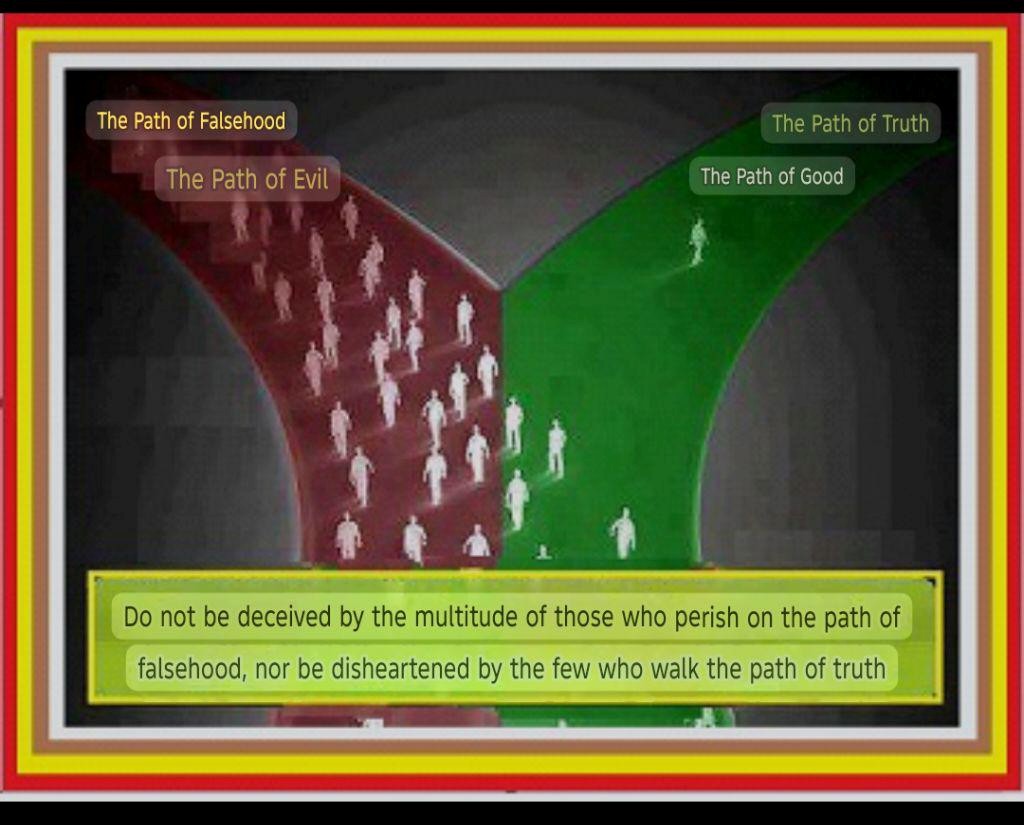
From all that has preceded, it becomes clear to us that man responds to his instincts and organic needs in one of two ways:
Either he responds to his instincts and organic needs in accordance with Allah's commands and prohibitions, in which case he has done good, followed the path of piety, and thus deserves the reward of Allah (swt).
Or he responds to his instincts and organic needs while turning away from Allah's commands and prohibitions, in which case he has done evil, followed the path of iniquity, and thus deserves the punishment of Allah (swt).
And Allah, glorified and exalted be He, has affirmed in His Mighty Book, which falsehood cannot approach from before it or behind it, that He will hold all people accountable on the Day of Judgment for what their hands have earned. He will reward the doer of good with the greatest reward, which is Paradise, abiding therein eternally, and He will punish the wrongdoer with the most severe punishment, which is the Fire of Hell, abiding therein eternally. And He, majestic is His majesty, has mentioned this in many verses; we mention, for example and not limitation, the following verses:
His saying (swt):
[هَـٰذَا يَوْمُ الْفَصْلِ الَّذِي كُنتُم بِهِ تُكَذِّبُونَ (21) احْشُرُوا الَّذِينَ ظَلَمُوا وَأَزْوَاجَهُمْ وَمَا كَانُوا يَعْبُدُونَ (22) مِن دُونِ اللَّـهِ فَاهْدُوهُمْ إِلَىٰ صِرَاطِ الْجَحِيمِ (23) وَقِفُوهُمْ إِنَّهُم مَّسْئُولُونَ]
“This is the Day of Judgment, which you used to deny. (21) Gather those who wronged and their associates and what they used to worship (22) besides Allah, and guide them to the path of Hellfire. (23) And stop them, for they are to be questioned” [TMQ As-Saffat 21-24].
And His saying (swt):
[فَاسْتَمْسِكْ بِالَّذِي أُوحِيَ إِلَيْكَ إِنَّكَ عَلَىٰ صِرَاطٍ مُّسْتَقِيمٍ (43) وَإِنَّهُ لَذِكْرٌ لَّكَ وَلِقَوْمِكَ وَسَوْفَ تُسْأَلُونَ]
“So hold fast to that which has been revealed to you. Indeed, you are on a straight path. (43) And indeed, it is a reminder for you and your people, and you will be questioned” [TMQ Az-Zukhruf 43-44].
And His saying (swt):
[ثُمَّ لَتُسْأَلُنَّ يَوْمَئِذٍ عَنِ النَّعِيمِ]
“Then you will surely be asked that Day about the pleasure” [TMQ Surah At-Takathur 8].
And His saying (swt):
[فَلَنَسْأَلَنَّ الَّذِينَ أُرْسِلَ إِلَيْهِمْ وَلَنَسْأَلَنَّ الْمُرْسَلِينَ]
“Then We will surely question those to whom the messengers were sent, and We will surely question the messengers” [TMQ Surah Al-A'raf 6].
And His saying (swt):
[فَوَرَبِّكَ لَنَسْأَلَنَّهُمْ أَجْمَعِينَ (92) عَمَّا كَانُوا يَعْمَلُونَ]
“So by your Lord, We will surely question them all (92) About what they used to do” [TMQ Al-Hijr 92-93].
O Believers:
We will conclude at this point in this halaqah. Our next time with you, Inshallah Taala, will be in the following halaqah. Until then, and until we meet you again, may you always be in the care, protection, and security of Allah. We ask Allah (swt) to honor us with Islam, to honor Islam through us, to grant us with His victory, to give us the joy of witnessing the establishment of the second Khilafah Rashidah (rightly-guided Caliphate) on the Method of the Prophethood in the near future, and to make us among its soldiers, witnesses, and martyrs. Indeed, He is the Protector and the Capable of this. We thank you.
Wasalaamu alaikum wa Rahmatullah wa Barakatahu