
 Many have interrupted Obama’s recent proclamation to suspend deployment of US missile shield components to Poland and the Czech Republic as proof that finally America is serious about recasting its relations with Russia in a more positive light. However, subsequent statements by members of Obama’s administration about future plans for missile defense dubbed ‘phased adaptive approach’ are likely to forestall warming of ties between Moscow and Washington. For instance in a New York Times opinion piece, US Defense Secretary Robert Gates criticized his detractors for describing the new plan as “distorted as some sort of concession to Russia”. He further emphasized that the new proposals would bolster European security. “We are strengthening-not scrapping-missile defense in Europe,” he wrote.
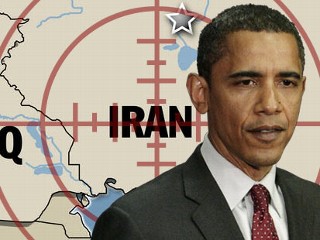
Away from the public bickering over the effectiveness of the phased adaptive approach, one cannot help but notice that America is most interested in resetting its relations with Iran and not Russia. New revelations about Iran’s diminished missile capabilities now set the stage for the normalization of relations between Tehran and Washington. Downplaying the Iranian threat last month, Robert Gates said, “the intelligence community now assesses that the threat from Iran’s short- and medium-range ballistic missiles…is developing more rapidly than previously projected” and “the threat of potential Iranian intercontinental ballistic missiles capabilities has been slower to develop than was estimated in 2006.” Gates sudden reassessment follows a familiar pattern frequently employed by US officials to downgrade the peril of Iran’s military assets-whenever the situation most demanded it. Previously, under the Bush administration, the National Intelligence Estimate (NIE) revised its estimate from 2010 to 2015 the date by when Iran would possess and atomic bomb. Additionally, and more significantly, the NIE claimed that Iran had abandoned plans to weaponize its nuclear programme in 2003. NIE claims were a severe below to Israeli plans to attack Iran, and at the time was widely derided by officials of the Jewish State. At the end of last year, America also refused to sell Israel advanced versions of its bunker-busters bombs and downplayed Israel’s show of air power over the Mediterranean. America’s lack of support to its most trusted ally in the region clearly underscores that American intentions towards Iran are not nefarious at all.
America’s ambivalence towards Iran was again on display when another close ally Britain found its sea personnel captured by Iranian forces. American indifference was intentional as she feared that Britain engineered the naval fiasco to instigate an attack on Iran. Likewise, the US offered very little public support to European voices that vociferously bellowed out calls for the Iranian protestors to topple the Iranian regime.
When scrupulously analysed each event presented America with a unique opportunity to initiate regime change in Iran that many politicians in Washington coveted for. But Washington chose not to do so. On the contrary, America acted in a strange manner-she either watched as a silent spectator or diplomatically mobilized efforts to cool down tensions. The out of character behaviour when measured against the ubiquitous fiery rhetoric that emanated from the corridors of power in Washington suggests to any reader of political events that the two countries are working in cohorts to cement America’s hegemony in the region.
America’s reliance on Iran to stabilize Afghanistan, Iraq and Lebanon is too precious to be squandered by any crude attempts undertaken by her closest allies to attack Tehran.
The overly inflated threat from Iran’s benign nuclear programme by the incessant news coverage has conveniently provided America with the necessary pretext to augment its military ties with Israel and the Gulf countries. Not to mention it also provides America with new avenues to strengthen her missile defense shield abroad and aid nuclear proliferation throughout the Middle East under the guise of peaceful nuclear pacts and in the shadow of nuclear arms reduction talks with Russia. There is little doubt that America will exploit such pacts to ward off competition from Russia, China, and Europe to control cheap Middle Eastern oil.
All of this brings us to the present nuclear talks between Iran and the big six powers. The talks will only conclude, when America is fully satisfied that she can no longer achieve any of her strategic objectives and that her surrogates in Iran have been completely exhausted and are unable to execute her plans. At that juncture, America will settle the nuclear issue and may even allow Iran to keep nuclear weapons in exchange for strict controls.